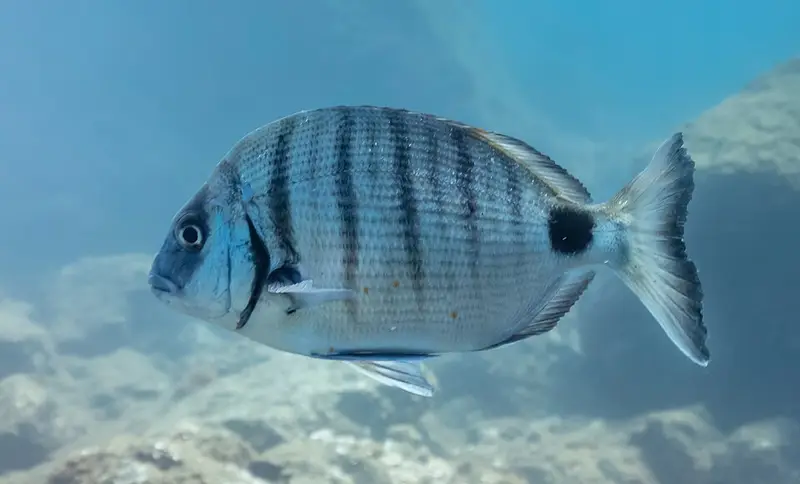
Diplodus sargus
Season calendar
- Season
- January–December
- Water temperature
- 14–26 °C
- Spawning
- February–April
- Behaviour
- Daytime bottom forager
Techniques
- Float fishing
- bottom rig
- light feeder
Timing
- Catchable from March to December, best from September to November.
- First light with a light swell and stirred water is the most productive condition.
Where
- The seaward face of moles, rock-to-sand transitions and mussel beds.
- From 1 to 15 m; work the foamy pockets where the water swirls.
Technique
- Mussel meat, marine worm, shrimp or crab pieces on a strong size 8-12 hook.
- A light sliding lead or float, with the bait held just above the bottom.
- 0.20-0.28 mm abrasion-resistant fluorocarbon; check the leader after every fish.
- Strike hard and immediately, and lift the fish clear of the rocks.
Frequently asked
- When is the best time to catch white seabream?
- The productive window for white seabream runs January–December. February–April is the spawning period; releasing your catch during these months is strongly advised.
- What water temperature does white seabream feed in?
- White seabream is most active between 14 and 26 °C. Outside that band its feeding rate drops off.
- How do you fish for white seabream?
- Common methods: Float fishing, bottom rig, light feeder.