Chondrostoma nasus
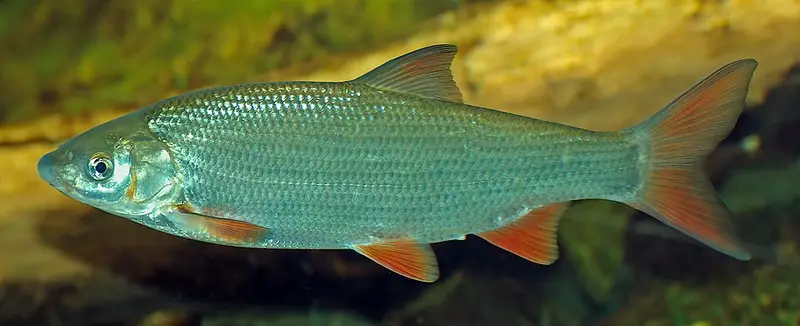
Season calendar
- Season
- May–November
- Water temperature
- 8–18 °C
- Spawning
- March–April
- Behaviour
- Daytime bottom forager
Techniques
- Float Fishing
- Light Bottom Rig
- River Fishing
Biology
- Length: 25-45 cm
- Forms large shoals on stony, fast-flowing shallows
- Spawns March to April, running into tributaries
Timing
- May to November: the normal fishing period.
- March to April: spawning, leave them alone.
- The best hours are the afternoon, once the sun has warmed the stones.
Technique
- Float: 2-4 g, drifted naturally with the current, 10-20 cm off the bottom.
- Bait: paste, a single grain of sweetcorn, red maggot, algae.
- Small hook (14-16), fine 0.14-0.16 mm hooklength.
- Groundbait: fine soil and bran mix, fed upstream of the swim.
Frequently asked
- When is the best time to catch common nase?
- The productive window for common nase runs May–November. March–April is the spawning period; releasing your catch during these months is strongly advised.
- What water temperature does common nase feed in?
- Common nase is most active between 8 and 18 °C. Outside that band its feeding rate drops off.
- How do you fish for common nase?
- Common methods: Float Fishing, Light Bottom Rig, River Fishing.