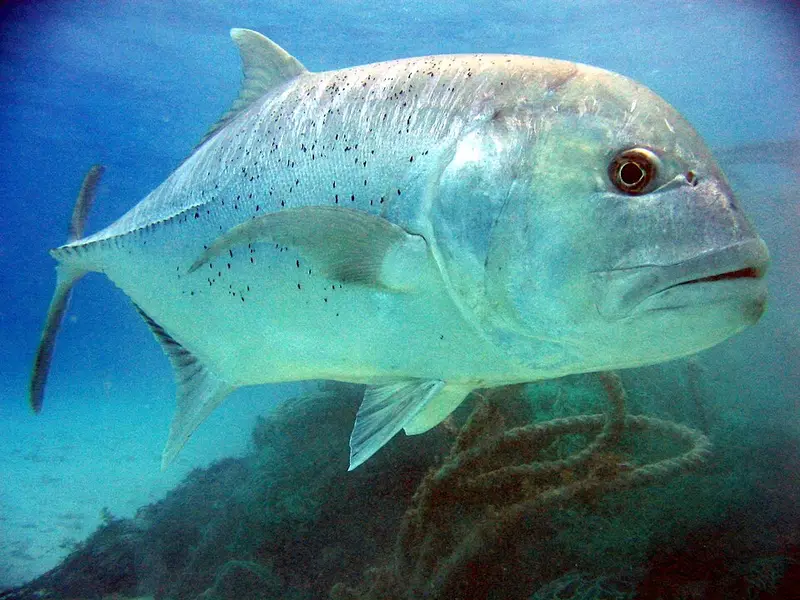
Caranx ignobilis
Season calendar
- Season
- March–November
- Water temperature
- 24–31 °C
- Spawning
- June–August
- Behaviour
- Daytime active, open water
Techniques
- Popping
- heavy jigging
- trolling
Baits
- Popper (100–200 g)
- Stickbait (100–250 g)
- Metal jig
- Live bait (bonito, mackerel scad)
Where to catch giant trevally
- Indian Ocean: the Maldives, Seychelles, Oman and Mozambique are world-famous GT destinations, especially on the flats and reef edges.
- Red Sea: reef walls, channel mouths and the Gulf of Aqaba in Egypt and Sudan.
- Pacific: Australia's Great Barrier Reef, Papua New Guinea, Hawaii (where it is called ulua) and remote atolls.
- Andaman Sea: Thailand and Myanmar offshore reefs and pinnacles.
GTs patrol reef edges, surge zones and current-swept channels. They often hunt in small groups and will charge a surface lure from a long distance.
How to identify a giant trevally
- Deep, powerful body, silver-grey to almost black in big males, with a steep, blunt forehead.
- A row of hard, bony scutes along the rear part of the lateral line, just before the tail.
- A small black spot at the upper base of the pectoral fin.
- Bluefin trevally are smaller, with electric-blue fins and fine dark spots on the body.
Size and record
- Fish of 10–30 kg are common at good destinations; fish over 50 kg are the ultimate trophy.
- The IGFA all-tackle record is 72.8 kg (160 lb 7 oz), caught in Japan in 2006.
Best lures and tackle
- Popper (100–200 g): loud, splashy retrieves over reef edges and in surge zones.
- Stickbait (100–250 g): sinking or floating, with long sweeping pulls.
- Metal jig: along drop-offs and pinnacles in deeper water.
- Live bait (bonito, mackerel scad): for the biggest fish when lures fail.
- Tackle: a heavy popping rod, 14000–20000 size reel, PE 8–10 braid and 130–200 lb leader.
Handling and eating
- GT fishing is almost always catch and release. Keep the fish in the water as much as possible, and revive it by holding it upright into the current.
- Large reef fish, including GT, can carry ciguatera, a toxin that causes serious food poisoning. Local rules and guides usually advise against keeping big fish to eat.
Frequently asked
- When is the best time to catch giant trevally?
- The productive window for giant trevally runs March–November. June–August is the spawning period; releasing your catch during these months is strongly advised.
- What water temperature does giant trevally feed in?
- Giant trevally is most active between 24 and 31 °C. Outside that band its feeding rate drops off.
- What bait works for giant trevally?
- The baits that stand out: Popper (100–200 g), Stickbait (100–250 g), Metal jig, Live bait (bonito, mackerel scad).
- How do you fish for giant trevally?
- Common methods: Popping, heavy jigging, trolling.