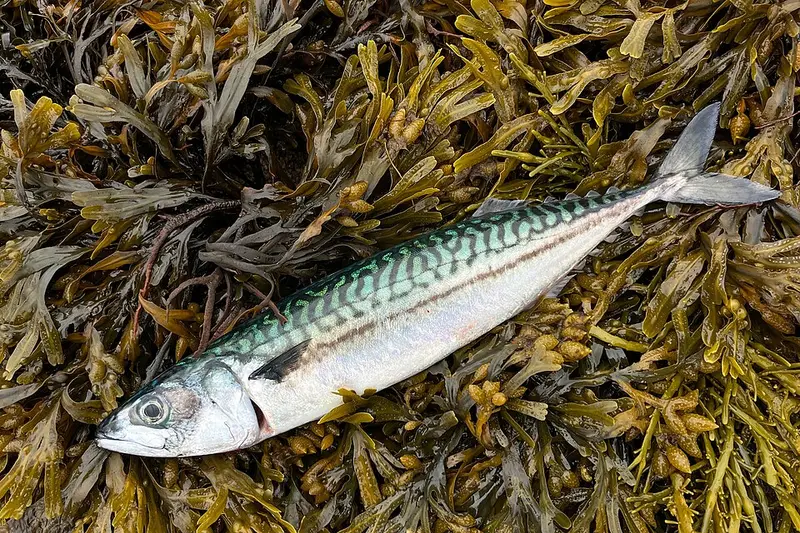
Scomber scombrus
Season calendar
- Season
- June–September
- Water temperature
- 11–20 °C
- Spawning
- May–July
- Behaviour
- Daytime active, open water
Techniques
- Feathers
- light spinning
- mole fishing
Timing
- Some years they start in mid-June, other years not until late July; they stay into late September.
- Dawn and dusk are best. An easterly wind pushes the surface water out and drags food inshore, the classic good condition at Hvide Sande.
Method
- A 4-6 feather sabiki rig with a 40-80 g lead on the end. Search different depths every 10-15 seconds.
- Spinning: 20-40 g spoons or pilks on a fast retrieve.
- Natural bait: fresh sandeel or herring strip.
- When a shoal switches on it can be over in minutes, so wait with the rig ready.
Afterwards
Bleed the fish and ice it immediately; mackerel spoils faster than almost anything else.
Frequently asked
- When is the best time to catch atlantic mackerel?
- The productive window for atlantic mackerel runs June–September. May–July is the spawning period; releasing your catch during these months is strongly advised.
- What water temperature does atlantic mackerel feed in?
- Atlantic mackerel is most active between 11 and 20 °C. Outside that band its feeding rate drops off.
- How do you fish for atlantic mackerel?
- Common methods: Feathers, light spinning, mole fishing.