Leuciscus aspius
Season calendar
- Season
- April–October
- Water temperature
- 12–24 °C
- Spawning
- April–May
- Behaviour
- Daytime active, open water
Techniques
- Spinning
- spoons
- long casting
Baits
- Casting lead lure (asp jig)
- Slim spoon, 15–30 g
- Pencil / stickbait
- Slim shallow minnow
- Tail spinner or blade bait
Timing
- May to September: they hunt shoals on the surface once the water passes 16 C.
- The first two hours after sunrise are the best; boiling water gives them away.
- Spawning is April and May over gravel in current.
Ground
- The current seam at groyne heads, bridge piers, and the line where fast water meets slack.
- On the tidal Elbe, the edges of sand bars in the last hour of the ebb.
Technique
- 15-30 g long slim spoons or pencil baits on a fast, uninterrupted retrieve.
- Surface pencils and poppers get attacks but hook few fish, so use single hooks.
- Casting distance is decisive; a 2.70-3.00 m rod and thin braid.
- The mouth is bony and hard, so strike firmly.
Where asp live
- A European river predator: native from the Rhine and Elbe east through the Oder, Vistula and Danube to the Volga and the rivers draining into the Black and Caspian seas.
- Also found in the Baltic region and in southern Scandinavia.
- It likes large, flowing rivers with gravel and sand, and hunts along groynes, weir pools, bridge piers and river mouths.
The asp is the only member of the carp family that lives purely as a predator. It drives bleak and small roach to the surface and strikes with a loud splash. Once you know that sound, you can find asp on any big river.
How to identify an asp
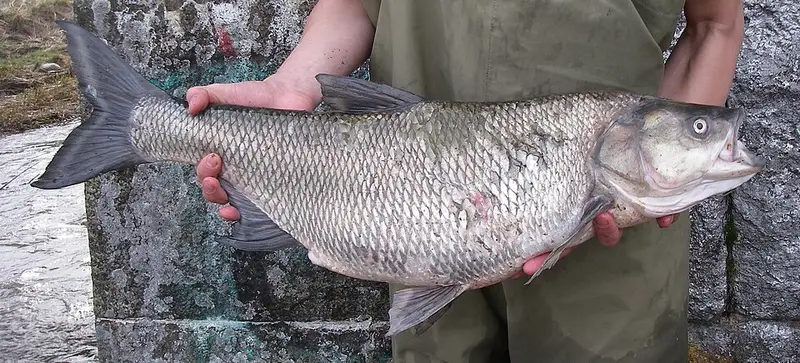
- Long, silvery body with a blue-grey back and a very large mouth that reaches back below the eye.
- The lower jaw juts forward and fits into a notch in the upper jaw.
- Chub look similar but have a smaller mouth, dark-edged scales in a net pattern and a rounder body.
Size
- Fish of 50–70 cm and 1.5–4 kg are typical; anything over 80 cm is a specimen.
Best lures for asp
- Casting lead lure (asp jig): heavy and slim for maximum distance, retrieved fast just under the surface.
- Slim spoon, 15–30 g: fast and without pauses across the current seam.
- Pencil / stickbait: on the surface when asp are visibly feeding.
- Slim shallow minnow: in wind or coloured water.
- Tail spinner or blade bait: in autumn and winter when fish hold deeper.
Tips for more hook-ups
- Cast long and retrieve fast across the current. Asp follow a lure only briefly.
- The bony mouth throws hooks: use sharp single hooks, strike firmly and keep the line tight.
- Closed seasons and size limits differ by country and region. Many areas protect asp during the April–May spawning season.
- The flesh is tasty but has many fine bones, so smoking or making fishcakes works best.
Frequently asked
- When is the best time to catch asp?
- The productive window for asp runs April–October. April–May is the spawning period; releasing your catch during these months is strongly advised.
- What water temperature does asp feed in?
- Asp is most active between 12 and 24 °C. Outside that band its feeding rate drops off.
- What bait works for asp?
- The baits that stand out: Casting lead lure (asp jig), Slim spoon, 15–30 g, Pencil / stickbait, Slim shallow minnow, Tail spinner or blade bait.
- How do you fish for asp?
- Common methods: Spinning, spoons, long casting.