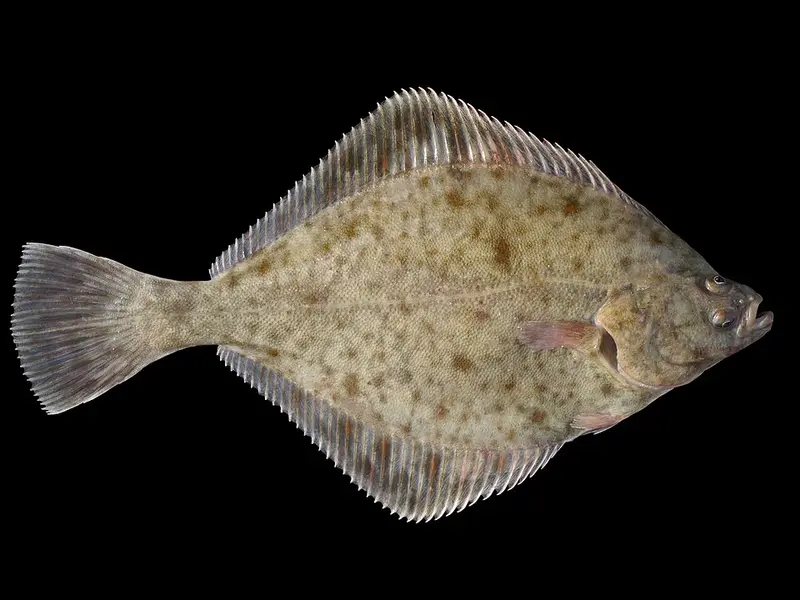
Platichthys flesus
Season calendar
- Season
- March–November
- Water temperature
- 4–21 °C
- Spawning
- February–April
- Behaviour
- Flatfish that ambushes from the bottom
Techniques
- Bottom rig
- estuary fishing
- baited spoon
Timing
- April to November; August to October gives the fattest and biggest fish.
- It spawns in deeper water from February to April and is scarce inshore then.
Where
- Coloured water with a freshwater input is its advantage: river mouths, sluice outfalls, harbour corners.
- Muddy-sandy bottom in 1-6 m is enough; long casts are not needed.
Bait and rig
- Lugworm and mussel are the most productive; shrimp and herring strip also work.
- A simple two-hook rig with 60-120 g lead. Orange and red beads make a clear difference.
- Move the bait a few centimetres every 20-30 seconds; flounder respond to a moving bait.
Frequently asked
- When is the best time to catch european flounder?
- The productive window for european flounder runs March–November. February–April is the spawning period; releasing your catch during these months is strongly advised.
- What water temperature does european flounder feed in?
- European flounder is most active between 4 and 21 °C. Outside that band its feeding rate drops off.
- How do you fish for european flounder?
- Common methods: Bottom rig, estuary fishing, baited spoon.