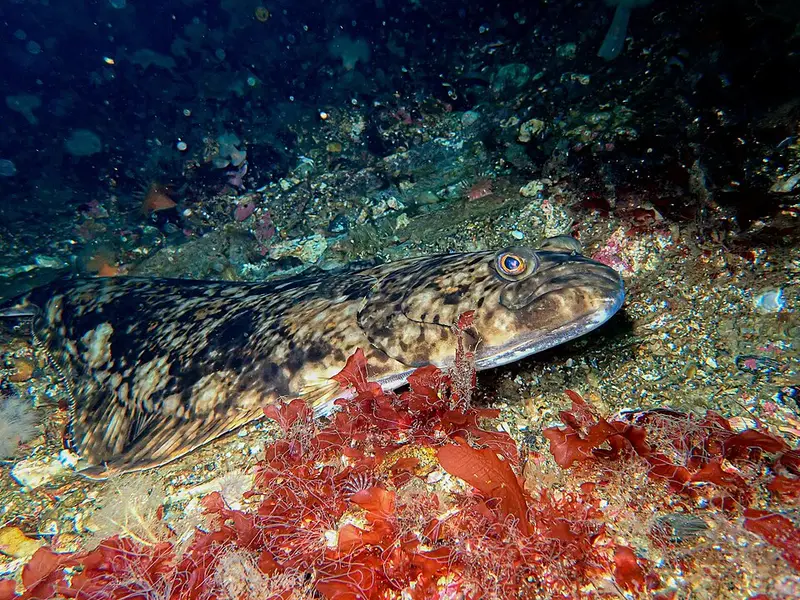
Hippoglossus hippoglossus
Season calendar
- Season
- May–November
- Water temperature
- 2–9 °C
- Spawning
- January–March, December
- Behaviour
- Flatfish that ambushes from the bottom
Techniques
- Heavy Jigging
- Drift Fishing
- Dead-bait Fishing
Where and When
- May to November is best, at 20-150 m on ridges and channel mouths where current sweeps the sand.
- The two or three hours of hard tidal flow are critical.
Method
- 300-600 g shads or rubber octopus, dragged along the bottom on the drift.
- Dead bait: a whole herring or mackerel, or squid, on a running-lead rig.
- 80-130 lb braid and a 1 mm plus leader; the first dive when the fish leaves the bottom is violent.
Rules
Halibut fishing is closed in Norway from 20 December to 31 March, and a maximum-length limit applies (2 m for visiting anglers). Always check current rules.
Frequently asked
- When is the best time to catch atlantic halibut?
- The productive window for atlantic halibut runs May–November. January–March, December is the spawning period; releasing your catch during these months is strongly advised.
- What water temperature does atlantic halibut feed in?
- Atlantic halibut is most active between 2 and 9 °C. Outside that band its feeding rate drops off.
- How do you fish for atlantic halibut?
- Common methods: Heavy Jigging, Drift Fishing, Dead-bait Fishing.