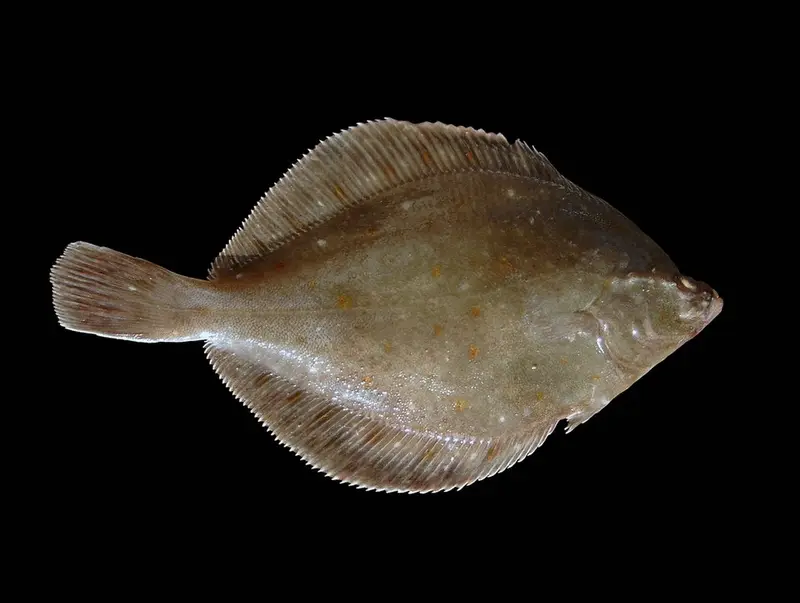
Pleuronectes platessa
Season calendar
- Season
- March–October
- Water temperature
- 4–17 °C
- Spawning
- January–March
- Behaviour
- Flatfish that ambushes from the bottom
Techniques
- Bottom rig
- distance casting
- beach and mole fishing
Timing
- Active April to November, best May to September. In winter they move deep to spawn and lose condition.
- They feed in daylight, but activity picks up at dawn and dusk.
Where
- Sand banks, surf gutters and clean sand patches around the moles.
- When surfcasting, the back of the second gutter is the classic target.
Bait and rig
- Lugworm is best; mussel and shrimp also work.
- Two-hook paternoster, size 4-2 long-shank hooks, 80-150 g lead. Beads and a small spinner blade add attraction.
- Drag the rig slowly; a moving bait gets far more takes.
Rules
The saltwater minimum size is around 27 cm depending on the area; check the current table on fiskepleje.dk.
Frequently asked
- When is the best time to catch european plaice?
- The productive window for european plaice runs March–October. January–March is the spawning period; releasing your catch during these months is strongly advised.
- What water temperature does european plaice feed in?
- European plaice is most active between 4 and 17 °C. Outside that band its feeding rate drops off.
- How do you fish for european plaice?
- Common methods: Bottom rig, distance casting, beach and mole fishing.