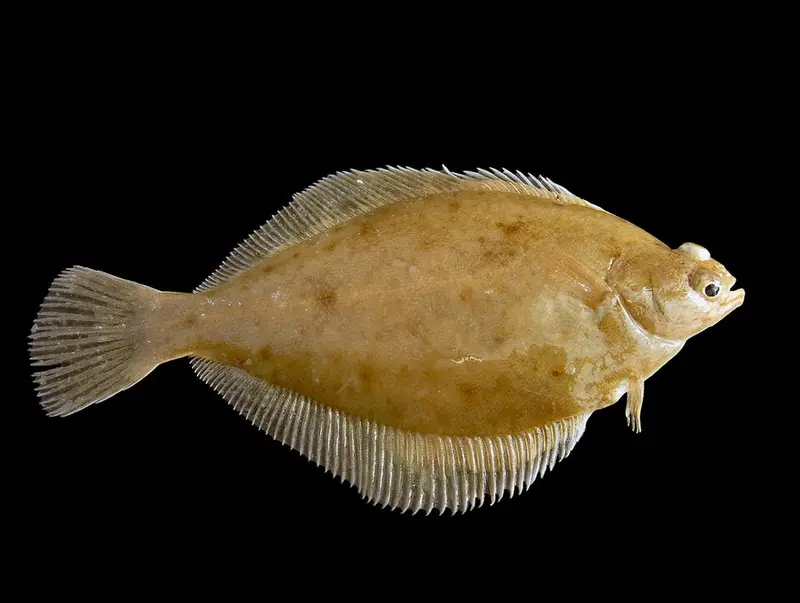
Limanda limanda
Season calendar
- Season
- January–May, September–December
- Water temperature
- 3–16 °C
- Spawning
- February–May
- Behaviour
- Flatfish that ambushes from the bottom
Techniques
- Bottom rig
- distance casting
- mole fishing
Timing and place
- Active April to November, closest inshore in late summer and autumn.
- Clean sand in 3-15 m; the gutters between mole heads and sand banks.
Method
- It has a small mouth: use size 6-4 hooks and small bait; a whole big lugworm is wasted.
- Lugworm, mussel meat and thin herring strip all work.
- It usually turns up as bycatch when fishing for plaice, but scaling hooks down makes it a target in its own right.
Rules
There is no national minimum size for dab in Denmark, but releasing fish under 25 cm is common practice; check the current table.
Frequently asked
- When is the best time to catch common dab?
- The productive window for common dab runs January–May, September–December. February–May is the spawning period; releasing your catch during these months is strongly advised.
- What water temperature does common dab feed in?
- Common dab is most active between 3 and 16 °C. Outside that band its feeding rate drops off.
- How do you fish for common dab?
- Common methods: Bottom rig, distance casting, mole fishing.