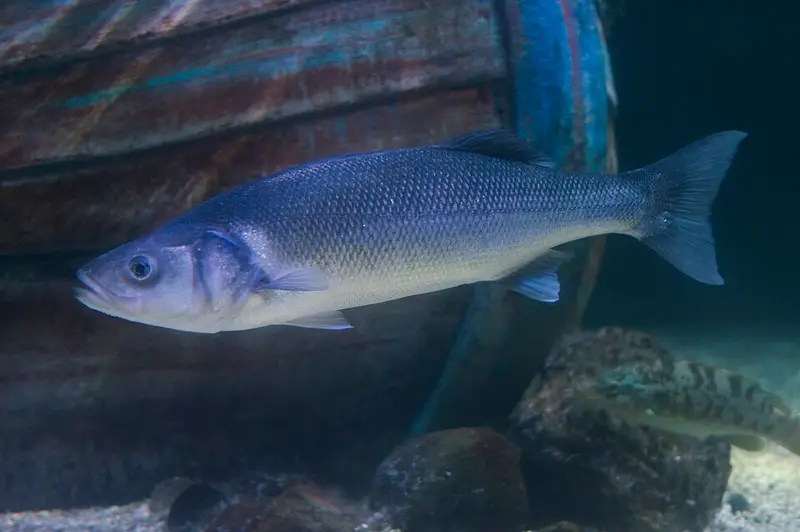
Dicentrarchus labrax
Season calendar
- Season
- March–May, September–November
- Water temperature
- 8–24 °C
- Spawning
- January–March
- Behaviour
- Crepuscular predator
Techniques
- Spinning
- Light Spinning/LRF
- Surf Fishing
- Live-bait Fishing
- Trolling
Where and When
- Focus on dawn, dusk and night around foam lines, current seams, harbour mouths, breakwaters and estuaries.
- Fish move closer in slightly turbid, rough water; in clear calm water use stealth and longer casts.
- Spring and autumn are strong shore-spinning periods.
Lures and Method
- Use 7–13 cm minnows/jerkbaits, 7–10 cm shads and pencils/poppers in calm low light.
- In cold or pressured conditions use slow retrieves and longer pauses; for active fish use twitch–pause and stop-and-go.
- Live shrimp, small anchovy/horse mackerel and durable squid strips are natural alternatives.
- Use a 0.28–0.35 mm fluorocarbon leader, slightly heavier around rocks.
Search the shore where wind gathers baitfish and repeat the productive angle and speed. Check current local size, bag and seasonal rules; release small fish carefully.
Frequently asked
- When is the best time to catch european seabass?
- The productive window for european seabass runs March–May, September–November. January–March is the spawning period; releasing your catch during these months is strongly advised.
- What water temperature does european seabass feed in?
- European Seabass is most active between 8 and 24 °C. Outside that band its feeding rate drops off.
- How do you fish for european seabass?
- Common methods: Spinning, Light Spinning/LRF, Surf Fishing, Live-bait Fishing, Trolling.