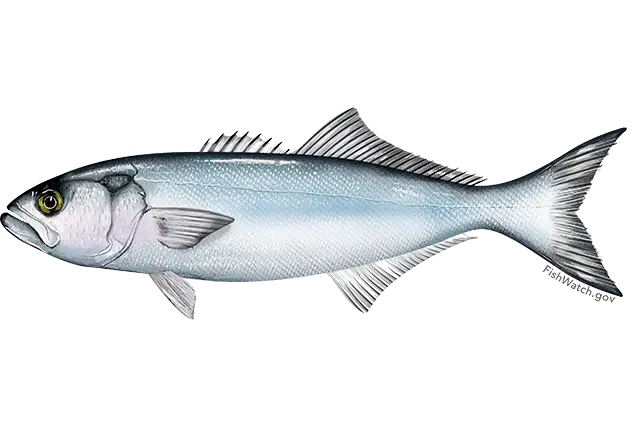
Pomatomus saltatrix
Season calendar
- Season
- September–December
- Water temperature
- 14–24 °C
- Spawning
- May–July
- Behaviour
- Crepuscular predator
Techniques
- Spinning
- Shore Jigging
- Trolling
- Live-bait Fishing
Baits
- Metal lures (spoons, diamond jigs)
- Topwater poppers and pencils
- Swimming plugs (minnows)
- Cut bait (bunker, mackerel)
- Live bait (peanut bunker, mullet)
Where and When
- In the Sea of Marmara and Bosphorus, the main shore season is commonly September–December.
- Prioritize dawn, dusk, current seams, headlands and places where baitfish are pushed to the surface.
- Diving birds and fleeing baitfish are strong signs of an active school.
Lures and Method
- Shore spinning: 9–14 cm minnows, pencils and poppers, plus 20–40 g spoons/jigs; use fast retrieves, short jerks and sudden pauses.
- Use X-Rap Long Cast over shallow water, heavier spoons/jigs in wind, and surface lures on calm mornings.
- Rig live horse mackerel or anchovy without injuring it; sardine strips also work on bait rigs.
- Use heavy fluorocarbon or a short, thin wire trace, strong clips and hooks.
Search different depths quickly, then repeat the productive line and retrieve speed. Do not lock the drag. Check current local size, bag and seasonal rules; release small fish promptly and carefully.
Bluefish along the US Atlantic coast
- Bluefish run the East Coast from Maine to Florida, moving north in spring and south again in fall.
- Well-known fisheries include the New Jersey and New York beaches, Long Island Sound, Chesapeake Bay and the Outer Banks of North Carolina.
- Look for a blitz: a school driving bait to the surface or onto the beach, with birds diving overhead. Cast to the edges and retrieve fast.
- Anglers call small ones snappers and big fish choppers or gators.
- Recreational bag limits were cut in recent years, and state rules differ. Check your state's current size and bag limits before keeping fish.
Bluefish around the world
- Australia: known as tailor, a classic beach and rock-fishing target.
- South Africa: known as elf or shad.
- Brazil: known as anchova.
- Mediterranean, Black Sea and Bosphorus: the Istanbul fall run is a centuries-old tradition.
How to identify a bluefish
- Blue-green back, silver sides and a large mouth lined with sharp, triangular teeth.
- Two dorsal fins, the first small and spiny, plus a dark blotch at the base of the pectoral fin.
- Amberjack look similar but have a dark stripe through the eye and lack the obvious teeth.
Size and record
- From shore, fish of 1–6 lb are typical; fish over 15 lb are a trophy.
- The IGFA all-tackle record is 31 lb 12 oz (14.4 kg), caught at Hatteras, North Carolina, in 1972.
Best bait and lures
- Metal lures (spoons, diamond jigs): cast far, retrieve fast and expect bite-offs.
- Topwater poppers and pencils: explosive strikes on blitzing fish.
- Swimming plugs (minnows): steady retrieve along current seams and jetties.
- Cut bait (bunker, mackerel): fished on the bottom from the surf, especially at night.
- Live bait (peanut bunker, mullet): the top choice for the biggest fish.
Rigging and handling
- A 7–9 ft spinning rod with a 4000-size reel and 20–30 lb braid covers most surf and jetty fishing.
- Use a 40–60 lb fluorocarbon leader, or a short wire leader when bite-offs start.
- Single hooks make unhooking safer and release faster.
- Never put your fingers near the mouth. Use a lip grip and long pliers.
- The oily flesh spoils quickly: bleed the fish, ice it right away and eat it fresh. Grilling or smoking suits it best.
Frequently asked
- When is the best time to catch bluefish?
- The productive window for bluefish runs September–December. May–July is the spawning period; releasing your catch during these months is strongly advised.
- What water temperature does bluefish feed in?
- Bluefish is most active between 14 and 24 °C. Outside that band its feeding rate drops off.
- What bait works for bluefish?
- The baits that stand out: Metal lures (spoons, diamond jigs), Topwater poppers and pencils, Swimming plugs (minnows), Cut bait (bunker, mackerel), Live bait (peanut bunker, mullet).
- How do you fish for bluefish?
- Common methods: Spinning, Shore Jigging, Trolling, Live-bait Fishing.