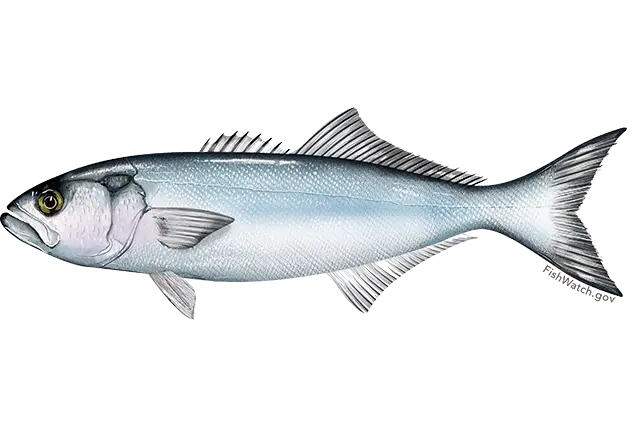
Pomatomus saltatrix
Season calendar
- Season
- August–November
- Water temperature
- 15–24 °C
- Spawning
- May–July
- Behaviour
- Crepuscular predator
Techniques
- Light Spinning
- Shore Jigging
- Bait Fishing
- Trolling
Where and When
- In the Sea of Marmara and Bosphorus, it follows inshore baitfish mainly from August to November.
- Dawn, dusk and night are productive around current pockets, piers, breakwater tips and light–dark boundaries.
- Fleeing anchovy or other small baitfish and diving birds indicate an active school.
Lures and Method
- Light spinning: 6–9 cm minnows/pencils and 7–15 g spoons or micro jigs. Use a fast steady retrieve, short twitches and 1–2 second pauses.
- Kendo Zero Arise 70S, 7 cm poppers, small Crystal Minnows and 15 g spoons are suitable profiles.
- Live anchovy, small horse mackerel or other small baitfish work well; use thin sardine strips on bait rigs.
- Because of sharp teeth, use 0.28–0.35 mm fluorocarbon or a short thin wire trace; avoid excessively light tackle.
Search the upper and middle water first, then count the lure down deeper. Check current local size, bag and seasonal rules; release undersized fish quickly with wet hands.
Frequently asked
- When is the best time to catch young bluefish (çinekop)?
- The productive window for young bluefish (çinekop) runs August–November. May–July is the spawning period; releasing your catch during these months is strongly advised.
- What water temperature does young bluefish (çinekop) feed in?
- Young Bluefish (Çinekop) is most active between 15 and 24 °C. Outside that band its feeding rate drops off.
- How do you fish for young bluefish (çinekop)?
- Common methods: Light Spinning, Shore Jigging, Bait Fishing, Trolling.