Chelon labrosus
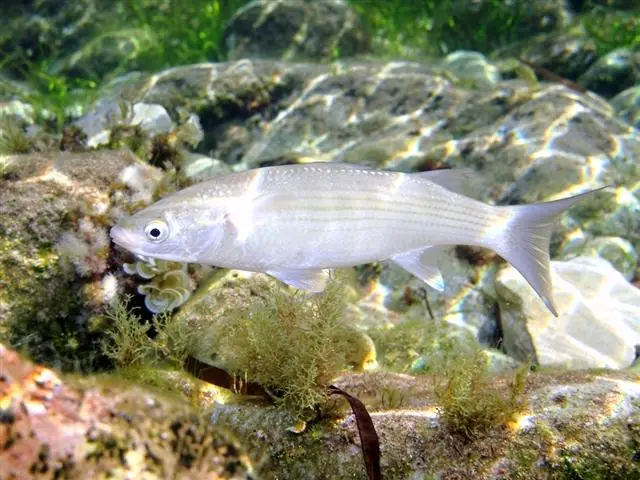
Season calendar
- Season
- June–September
- Water temperature
- 12–22 °C
- Spawning
- February–April
- Behaviour
- Daytime bottom forager
Techniques
- Float Fishing
- Light Rig
- Fly Fishing
Where and when
- Warm, shallow, calm water; they cruise on the surface in afternoon sun.
- Harbour basins, marina corners, algae-covered quay walls and river mouths.
Method
- Very fine tackle: 0.16-0.20 mm fluorocarbon, size 10-14 hooks, a small float.
- Bait: bread paste, algae (sea lettuce) or a small piece of shrimp.
- Groundbait with soaked bread to gather the fish, then drift the hookbait down the same current line.
- Bites are delicate; when the float dips hesitantly, wait, then lift softly.
Note
It fights hard and gives a long battle on light tackle. In Denmark it is traditionally fished catch and release.
Frequently asked
- When is the best time to catch thick-lipped grey mullet?
- The productive window for thick-lipped grey mullet runs June–September. February–April is the spawning period; releasing your catch during these months is strongly advised.
- What water temperature does thick-lipped grey mullet feed in?
- Thick-lipped grey mullet is most active between 12 and 22 °C. Outside that band its feeding rate drops off.
- How do you fish for thick-lipped grey mullet?
- Common methods: Float Fishing, Light Rig, Fly Fishing.