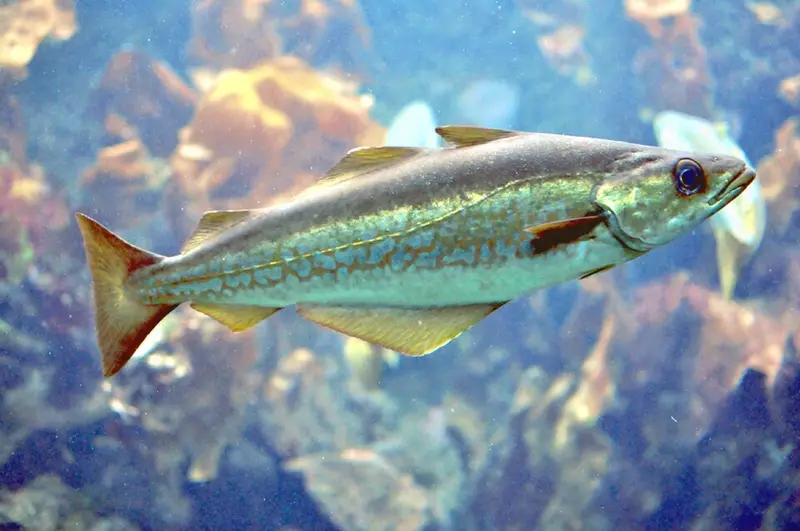
Pollachius pollachius
Season calendar
- Season
- January–May, September–December
- Water temperature
- 8–16 °C
- Spawning
- February–April
- Behaviour
- Ambushes from structure
Techniques
- Spinning
- jigging
- live bait
Timing
- April to November is best, with dawn and dusk the prime hours.
- The first two hours of running tide usually decide the session.
Method
- 12–20 cm shads on 20–40 g jigheads: drop to the bottom and lift slowly.
- A steady retrieve just over the kelp draws savage takes; do not lock the drag on the first dive.
- Use 0.35–0.40 mm fluorocarbon and check it often, kelp and rock abrade fast.
The bigger fish sit deep; release shallow-caught fish quickly.
Frequently asked
- When is the best time to catch pollack?
- The productive window for pollack runs January–May, September–December. February–April is the spawning period; releasing your catch during these months is strongly advised.
- What water temperature does pollack feed in?
- Pollack is most active between 8 and 16 °C. Outside that band its feeding rate drops off.
- How do you fish for pollack?
- Common methods: Spinning, jigging, live bait.