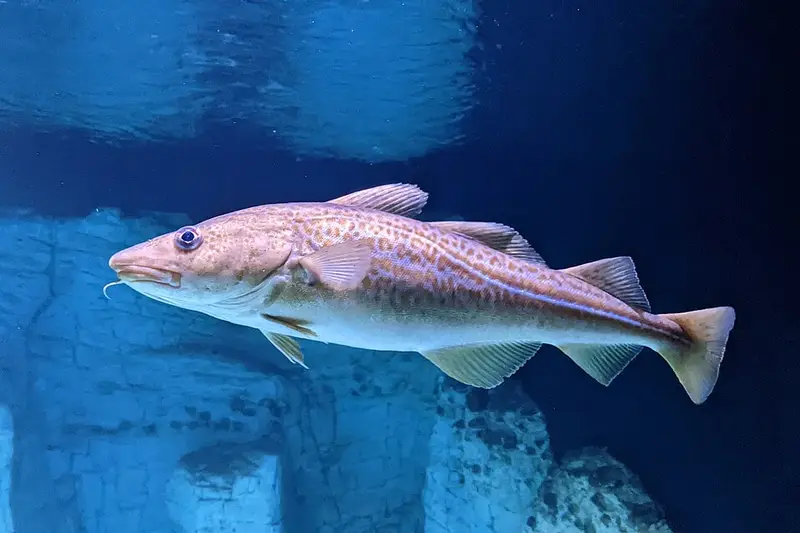
Gadus morhua
Season calendar
- Season
- January–April, October–December
- Water temperature
- 3–14 °C
- Spawning
- January–April
- Behaviour
- Cold water, feeds on the drift
Techniques
- Bottom rig
- distance casting
- night fishing
Legal status (IMPORTANT)
Recreational cod fishing is closed in the Baltic Sea and in the inner Danish waters (Øresund and the belts). In the Kattegat cod may only be taken as bycatch, not targeted. Fishing continues in the North Sea and Skagerrak but the quota is falling year on year. From 2026 catches of certain species in saltwater must be reported through the RecFishing app. Check the current rules on lfst.dk before you go.
Where and when
- Best from the North Sea moles at Hvide Sande, Thyborøn and Hanstholm from October to April.
- Fish move right in when the water drops below 10 °C, and evening and night are clearly better than daylight.
- The mole base, the edge of the tetrapods and the current line off the harbour mouth are the classic stands.
Bait and method
- Bottom rig: 100-200 g lead, two-hook paternoster, lugworm, mussel or squid strip.
- Pilks of 60-150 g; touch bottom, lift three to five times, then drop back — most takes come on the fall.
- Use 0.40-0.50 mm fluorocarbon; mole stone chews through line, so check after every fish.
Frequently asked
- When is the best time to catch atlantic cod?
- The productive window for atlantic cod runs January–April, October–December. January–April is the spawning period; releasing your catch during these months is strongly advised.
- What water temperature does atlantic cod feed in?
- Atlantic cod is most active between 3 and 14 °C. Outside that band its feeding rate drops off.
- How do you fish for atlantic cod?
- Common methods: Bottom rig, distance casting, night fishing.