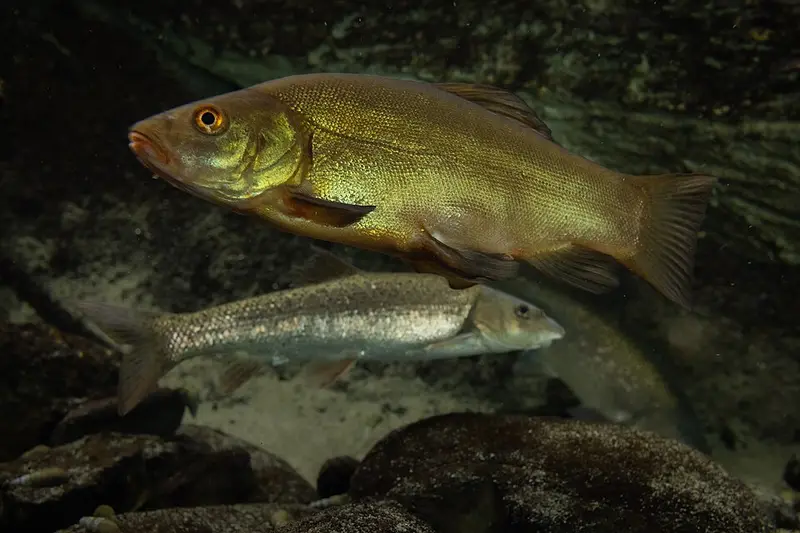
Tinca tinca
Season calendar
- Season
- May–September
- Water temperature
- 15–26 °C
- Spawning
- May–June
- Behaviour
- Warm water, bottom feeder
Techniques
- Float Fishing
- Light Bottom Rig
- Reed Margins
Biology
- Length: 25-45 cm, big fish over 50 cm and 2 kg
- Dark green with thick slimy skin; feeds under lilies and reeds
- Spawns mid-May to late June and is protected then
Timing
- May to September: the active period, water above 16 °C.
- 04:00 to 08:00 is the heaviest feeding; bubbles rising off the bottom give the fish away.
- In cool weather it almost stops feeding.
Technique
- Float: 1-3 g, bait static on the bottom in 40-80 cm of water.
- Bait: red worm, sweetcorn, a ball of maggots, pellet.
- Feed 1-2 m out from the reed edge; silence is critical.
- 0.18-0.22 mm hooklength, size 10-12 hook; the first run heads for the reeds, so apply side pressure away from them.
Frequently asked
- When is the best time to catch tench?
- The productive window for tench runs May–September. May–June is the spawning period; releasing your catch during these months is strongly advised.
- What water temperature does tench feed in?
- Tench is most active between 15 and 26 °C. Outside that band its feeding rate drops off.
- How do you fish for tench?
- Common methods: Float Fishing, Light Bottom Rig, Reed Margins.