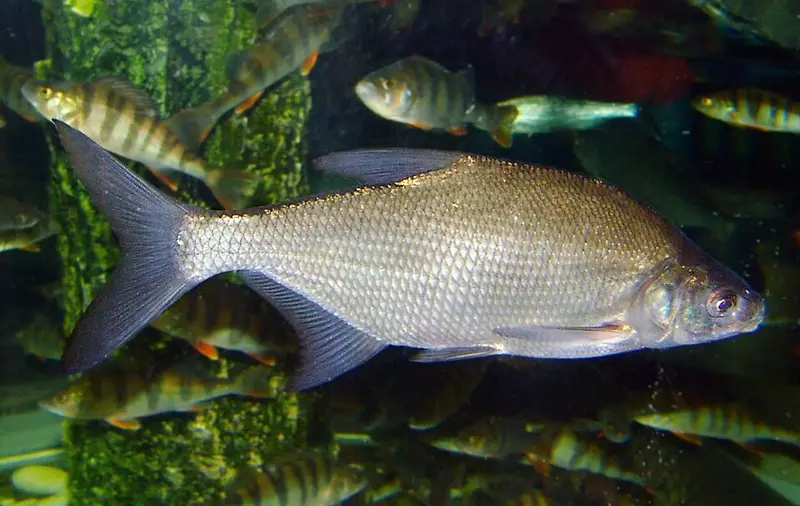
Abramis brama
Season calendar
- Season
- April–October
- Water temperature
- 12–25 °C
- Spawning
- May–June
- Behaviour
- Warm water, bottom feeder
Techniques
- Feeder Fishing
- Bottom Rig
- Match Fishing
Timing and place
- Active April to October; May to June after spawning and August to September are the best windows.
- Dawn, dusk and night. Coloured water on the windward shore is ideal.
- Muddy flats of 2-4 m in front of the reeds and along channel edges.
Method
- Feeder or method feeder, 0.22-0.26 mm mainline, size 12-14 hooks.
- Bait: sweetcorn, worm, a bunch of maggots. Add breadcrumb and soil to the groundbait.
- Heavy prebaiting matters: start with three to five balls, then top up a little on every cast.
- The bite is slow and heavy; wait for the tip to pull round steadily.
Note
Bream are forage for pike and zander, so where the shoal sits the predators are close by.
Frequently asked
- When is the best time to catch common bream?
- The productive window for common bream runs April–October. May–June is the spawning period; releasing your catch during these months is strongly advised.
- What water temperature does common bream feed in?
- Common bream is most active between 12 and 25 °C. Outside that band its feeding rate drops off.
- How do you fish for common bream?
- Common methods: Feeder Fishing, Bottom Rig, Match Fishing.