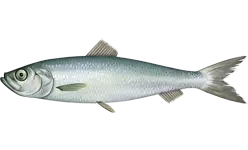
Clupea harengus
Season calendar
- Season
- March–May, September–November
- Water temperature
- 3–14 °C
- Spawning
- March–May
- Behaviour
- Shoaling baitfish
Techniques
- Paternoster
- Pier and Mole Fishing
Timing
- Main season February to May, with a second run October to December.
- Densest when the water is 4-8 °C. Late afternoon and the first hours of darkness, especially under harbour lights.
Where
- The inner side of the sluice at Hvide Sande, the narrows at Aggersund, harbour basins and deep quay edges.
- The line where current meets light is the key spot.
Method
- A 5-8 hook feather or flasher sabiki with 20-60 g lead.
- Work it vertically: three or four short lifts then a pause. Takes usually come on the pause.
- Once you find the depth of the shoal, repeat the same count.
Note
Herring is also the best natural bait for sea trout and cod, so keep a few aside for bait.
Frequently asked
- When is the best time to catch atlantic herring?
- The productive window for atlantic herring runs March–May, September–November. March–May is the spawning period; releasing your catch during these months is strongly advised.
- What water temperature does atlantic herring feed in?
- Atlantic herring is most active between 3 and 14 °C. Outside that band its feeding rate drops off.
- How do you fish for atlantic herring?
- Common methods: Paternoster, Pier and Mole Fishing.